Impact Sliding Door Maintenance Guide — Fort Myers & SW Florida
A season-by-season checklist for Lee County homeowners to extend the life of their impact-rated sliding doors, protect their hurricane rating, and avoid costly repairs.
Service Schedule
Expected Lifespan
DIY Checklist Below
Impact sliding doors in Fort Myers and Lee County face conditions that don’t exist in most of the country: salt air off the Gulf and canal systems, 180+ days of humidity above 80%, UV intensity that degrades seals and lubricants in months, and annual hurricane seasons that put real mechanical stress on every component. A door that’s maintained properly lasts 20–30 years and holds its WBDR rating through every storm. A door that’s ignored fails in 7–10 years — and often fails exactly when you need it most. This guide gives you a practical, Fort Myers-specific maintenance schedule.
The Fort Myers Impact Door Maintenance Calendar
Two service windows per year align with Southwest Florida’s climate cycle. Miss both and you’re running on borrowed time.
- Inspect glass for cracks, chips, delamination (white clouding between panes)
- Test multi-point lock — all engagement points must latch fully
- Check frame alignment — doors should close flush with no gaps
- Clear weep holes of summer debris buildup
- Inspect bottom weatherstrip for compression failure after storm season
- Clean and dry-lubricate rollers with PTFE spray
- Check anti-lift pins and top guide rail for storm damage
- Full roller inspection — look for flat-spotting or wobble
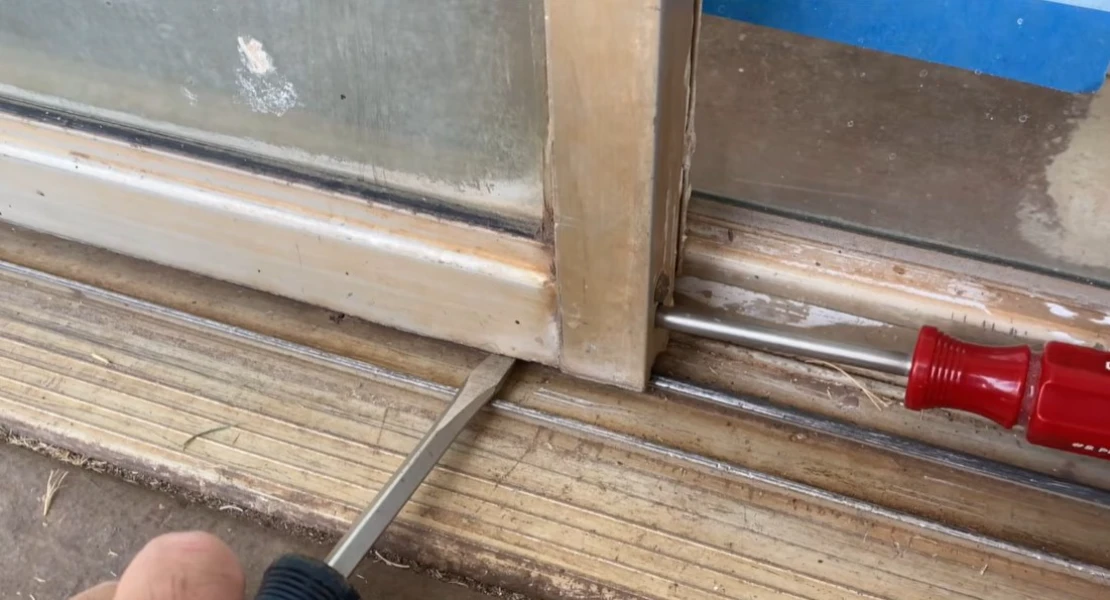
- Deep-clean tracks with stiff brush and compressed air
- Test door lift: panel should not lift more than ¼” from track
- Lubricate lock mechanism with graphite or dry PTFE
- Replace weatherstripping if compressed flat or cracked
- Check all frame screws — salt air corrosion loosens hardware
- Confirm screen door rollers and latches work correctly
- Verify door closes and locks before June 1 hurricane season start
Monthly 5-Minute DIY Inspection
You don’t need a technician to catch early warning signs. Run through this once a month — it takes less than five minutes and catches 80% of developing problems before they become emergency calls.
🔍 Monthly Visual & Function Check
- Slide the door fully open and closed — does it move smoothly with one hand, or do you have to push/pull hard?
- Listen for clicking, grinding, or scraping sounds as the door moves — clicking = roller flat-spots forming; grinding = roller already failed
- Lock the door and tug the panel outward — it should not move. Any give means the anti-lift pins or roller height need adjustment
- Look at the bottom track — visible dirt, sand, or leaf buildup should be swept out (use a dry brush, not water)
- Check the weep holes (small holes at the bottom of the track frame) — poke a wire or toothpick in if you haven’t cleared them recently
- Look at the bottom of the glass — any white fogging or condensation between the panes means the IGU seal has failed
- Check the weatherstrip along the door edge — it should be soft and pliable, not hard, cracked, or compressed flat
Lubrication: What to Use, What to Never Touch Your Door With
The single most common DIY mistake on impact sliding doors in Fort Myers is using the wrong lubricant. The wrong product can destroy rollers, attract sand into the track, and compromise the seal.
✅ Correct products for Fort Myers impact doors
- Dry PTFE (Teflon) spray on rollers: Apply to the roller wheels and axle housings only. Dry spray doesn’t attract sand or debris — critical in Lee County’s sandy environment. Brands: 3-IN-ONE PTFE, Blaster PTFE.
- Silicone spray on weatherstripping: Keeps the rubber/vinyl seal supple and prevents UV cracking. Apply to the door edge weatherstripping and the top/side frame seals. Do not apply to the bottom track.
- Graphite powder or dry PTFE on lock mechanism: Lubricates the multi-point lock cam and latch without attracting dust into the lock cylinder.
- Nothing on the bottom track: The track should stay clean and dry. Lubricant in the track traps sand and accelerates wear.
❌ Never use these on impact sliding doors
- WD-40: It’s a solvent and water displacer, not a lubricant. It strips existing grease from roller bearings and leaves a residue that attracts sand. Using WD-40 on a stiff impact door roller is the fastest way to destroy it.
- Cooking oils (coconut, olive, vegetable): Common home remedy that seems to work for a week, then turns rancid, gums up, and traps every grain of sand that blows in.
- Petroleum-based greases (white lithium, axle grease): Too heavy for residential door rollers; attracts debris and becomes a grinding paste in Fort Myers’s dusty, sandy conditions.
- Spray paint or rust remover on tracks: Alters the track profile and causes rollers to bind.
How Long Do Impact Door Components Last in Fort Myers?
Southwest Florida’s coastal climate cuts the lifespan of every metal component compared to manufacturer specs written for national averages. Here’s a realistic expectation for Lee County homes:
| Component | Inland Fort Myers | Canal / Gulf-Front | Warning Signs |
|---|---|---|---|
| Standard steel rollers | 5–8 years | 2–4 years | Clicking, hard to slide, door drops |
| Stainless steel / marine-grade rollers | 12–18 years | 8–12 years | Grinding late in life, slight wobble |
| Multi-point lock mechanism | 10–15 years | 6–10 years | Stiff operation, won’t engage all points |
| Weatherstripping / door seals | 5–8 years | 4–6 years | Hard, cracked, or compressed flat; drafts |
| IGU glass seal (fogging) | 10–15 years | 8–12 years | White fogging / condensation between panes |
| Laminated impact glass (intact) | 25–30+ years | 20–25 years | Cracks, chips, or delamination after impact |
| Aluminum frame (intact) | 30–40 years | 25–35 years | Warping, pitting, structural failure |
Pre-Hurricane Season Impact Door Checklist (Fort Myers)
Florida’s hurricane season runs June 1 – November 30. Your impact doors need to be fully functional and certified before it starts — not during an approaching storm. This is the checklist we recommend for every Lee County homeowner by May 31:
🌀 Hurricane Readiness — Complete Before June 1
- Glass integrity: Inspect every panel for cracks, chips, or delamination. Even a hairline crack in the outer lite reduces impact resistance — get it assessed.
- Multi-point lock test: Lock the door and count the engagement points. All must latch firmly. If the handle is stiff or any point doesn’t engage, schedule repair now — not when a storm is 48 hours out.
- Lift test: With the door locked, push outward on the panel from outside (or have someone do it). The panel should not lift or flex. If it does, anti-lift pins or roller height needs adjustment.
- Frame seal check: Run your hand along the door frame perimeter when the door is closed — you should feel no air movement. Any draft means the compression seal has failed.
- Track condition: The bottom track should be clean, unobstructed, and undented. A bent track from previous storm debris prevents the door from seating correctly during a storm.
- NOA documentation: Locate your door’s Notice of Acceptance number (on the frame sticker or original installation paperwork). Your insurer may need it to process a storm damage claim.
- Professional inspection: If your door is 10+ years old or took debris hits last season, schedule a professional assessment before June — not after the storm.
When to Stop DIY and Call a DBPR-Licensed Technician
Most routine maintenance is genuinely DIY-friendly. But several signs mean you need a licensed technician — not a handyman, and not a YouTube tutorial:
- The door requires more than one hand to slide: Roller failure is imminent. Standard roller replacement is $120–$220 and prevents a door that drops into the track and becomes immovable.
- Any grinding noise: The roller has already failed and you’re rolling the door on the axle housing. Every slide damages the track. Stop using the door and call same-day.
- The lock won’t engage all multi-point latches: Your door is not hurricane-rated in this condition. This is a safety issue, not a convenience issue.
- The panel lifts more than ¼” from the track when pushed: Anti-lift pins are missing or failed — a significant security and hurricane vulnerability.
- Any crack, chip, or white fogging in the glass: Impact glass with a compromised outer lite has reduced hurricane resistance. Requires professional assessment and likely glass replacement.
- Water intrusion during any rainstorm (not just hurricanes): Weep holes and seals have failed together. Needs track cleaning, seal replacement, and possibly frame resealing — not just new weatherstripping.
- The door went off track: Lifting it back in doesn’t fix the underlying cause. A technician needs to identify whether it was rollers, track damage, or frame misalignment.
Related Services & Guides
Due for Your Pre-Season Impact Door Check?
DBPR-licensed technicians serving Fort Myers, Cape Coral, Estero, and all of Lee County. Written quote before we start — same-day hardware repairs available.
📞 Schedule a Free Inspection