
Why Sliding Door Rollers Fail Faster in Fort Myers Than Almost Anywhere Else in Florida
Sliding door rollers in Fort Myers typically last 3–5 years in coastal and waterfront homes and 5–7 years in inland neighborhoods — vs. the 7–10 year lifespan manufacturers rate them for in standard conditions. Three compounding Southwest Florida stressors are responsible: Gulf salt air, daily heat cycling on aluminum tracks, and fine Gulf-blown sand — none of which appear in warranty literature written for the rest of the country.
After servicing sliding doors across Lee County — from McGregor Corridor condos to Iona waterfront homes to Gulf Harbour Yacht & Country Club — the same three culprits show up on nearly every job. Here is exactly what is happening inside your door, and what it means for your home.
The Three Forces Destroying Your Rollers
1. Heat Cycling: What 95°F Does to an Aluminum Track Every Single Day
Fort Myers averages highs above 91°F from June through September, with heat index values regularly reaching 105–110°F on west-facing lanais. That aluminum track your rollers ride on expands measurably in that heat — and contracts again every night when temperatures drop into the mid-70s.
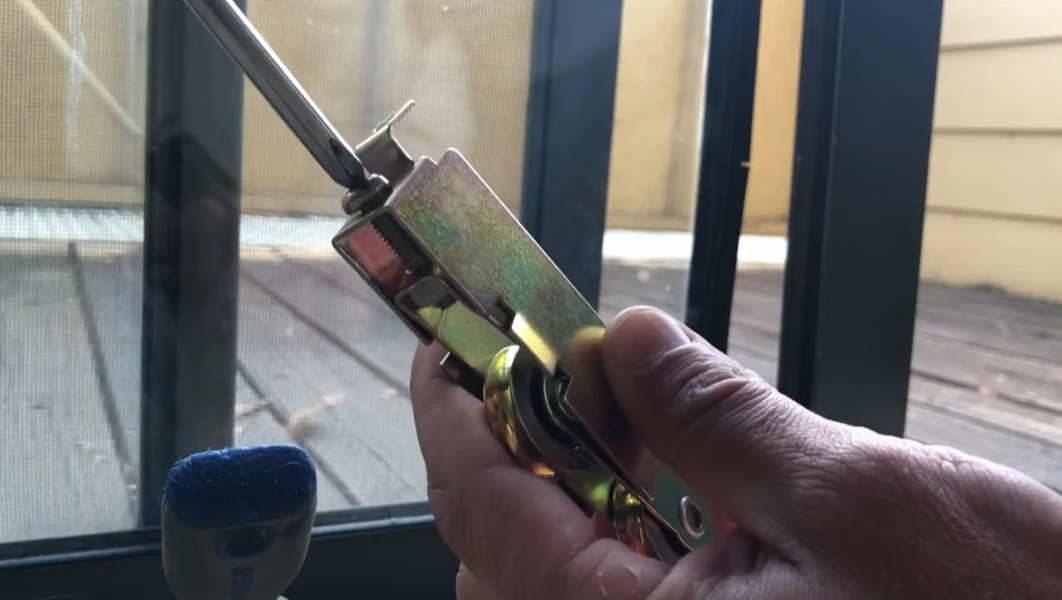
This daily expansion-contraction cycle, repeated hundreds of times a year, does two things. First, it gradually warps the track profile from a clean channel into a subtly bowed or pinched groove that creates friction points your rollers were never designed to navigate. Second, it widens the gap between the roller and the track wall during peak heat, allowing sand and grit to pack into spaces that are normally tight enough to exclude them.
Homes along the McGregor Corridor — where south- and west-facing lanais take full afternoon sun — show this track warping pattern earlier than shaded properties. The same applies to single-story homes in Iona and along College Parkway where there is no architectural shade on the rear of the house.
If the track has developed warping from heat cycling, roller replacement without track correction will reproduce the same sticking problem within 12–18 months. Always have the track inspected alongside the rollers.
2. Airborne Gulf Salt: The Invisible Abrasive You Cannot See
The prevailing southwest sea breeze carries microscopic sodium chloride particles inland from the Gulf year-round — not just on storm days. You cannot see this salt. You cannot feel it. But it deposits on every exposed metal surface on your home’s exterior, including the tracks of your sliding door.
Sodium chloride is hygroscopic — it pulls moisture from the air even when it is not raining. That constant moisture accelerates oxidation of the steel axle at the center of every roller. The bearing surface corrodes, resistance builds, and what started as smooth gliding becomes a grinding drag that worsens with every open-close cycle.
In waterfront communities — canal homes along the Caloosahatchee River and properties inside Gulf Harbour Yacht & Country Club — this process is measurably faster. We consistently see roller axle corrosion in Gulf Harbour homes at the 2–3 year mark on doors that would last 7+ years installed 15 miles inland.
The salt does not stop at the rollers. It works into the aluminum track surface, creating microscopic pitting that adds friction even after new rollers are installed. In severe coastal exposure — particularly Fort Myers Beach and Estero Island properties — track replacement alongside roller replacement is the only way to restore smooth operation long-term.
3. Fine Gulf Sand: The Grinding Compound Nobody Accounts For
Gulf-coast sand particles in the Fort Myers area are exceptionally fine — fine enough to stay suspended in moving air and travel miles from the shoreline. They settle into the bottom track of your sliding door, mix with whatever lubricant is present, and form an abrasive paste that functions like a slow grinding compound.
Every time you open or close your door, the rollers pass through this paste. The nylon roller surface wears. The steel bearing inside wears. The track surface wears. It happens slowly enough that you do not notice it day-to-day, but over two to three years the cumulative damage is significant.
Do not use WD-40 on a Fort Myers sliding door. WD-40 is a solvent, not a lubricant. It strips existing grease, leaves an oily residue, and that residue captures Gulf sand far more efficiently than a dry track — making the abrasive paste thicker and more damaging within weeks. Use dry PTFE spray or silicone spray after a thorough track cleaning.
Realistic Roller Lifespan by Fort Myers ZIP Code
Based on service calls across Lee County, here is what to expect from your door system depending on where you live:
Moderate salt; urban canopy mitigates heat cycling
Inland enough to reduce salt load significantly
Gulf proximity + heavier doors in high-income properties
Extreme heat cycling on large-panel new construction
Caloosahatchee tidal salt — near-coastal conditions
Direct Gulf exposure — most demanding in Lee County
How to Tell If Rollers Are the Problem
Run this quick diagnostic before calling for service:
- The One-Finger TestA properly functioning sliding door moves with one finger — no gripping, no leaning. If it takes your full hand or body weight, rollers have degraded.
- Listen for the GrindWorn rollers produce a grinding or crunching sound. A warped track produces rhythmic resistance — stiff in one spot, free, then stiff again. These are different problems with different fixes.
- Check the Bottom CornerIf the door panel sits unevenly — lower on one side — a roller has collapsed. Left unaddressed, this stresses the frame and turns a $200 repair into a much larger job.
- Inspect the Track SurfaceA healthy aluminum track is shiny silver. White discoloration = oxidation. Black buildup = compacted grit. Visible scoring grooves = track needs replacement alongside rollers.
What the Repair Actually Involves
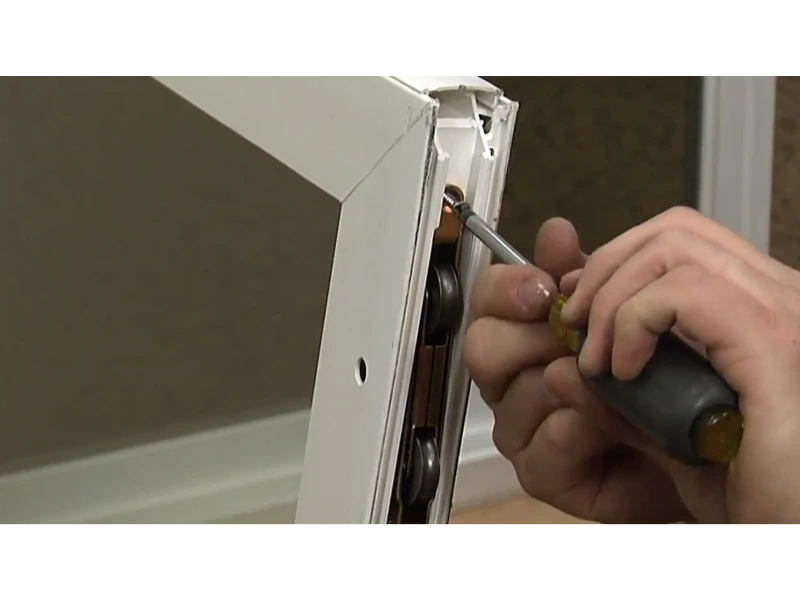
A roller replacement on a standard Fort Myers sliding door takes 45–90 minutes. The technician removes the door panel, replaces both roller carriages, cleans and inspects the track, adjusts door height for level travel, and verifies smooth one-finger operation with the lock engaged.
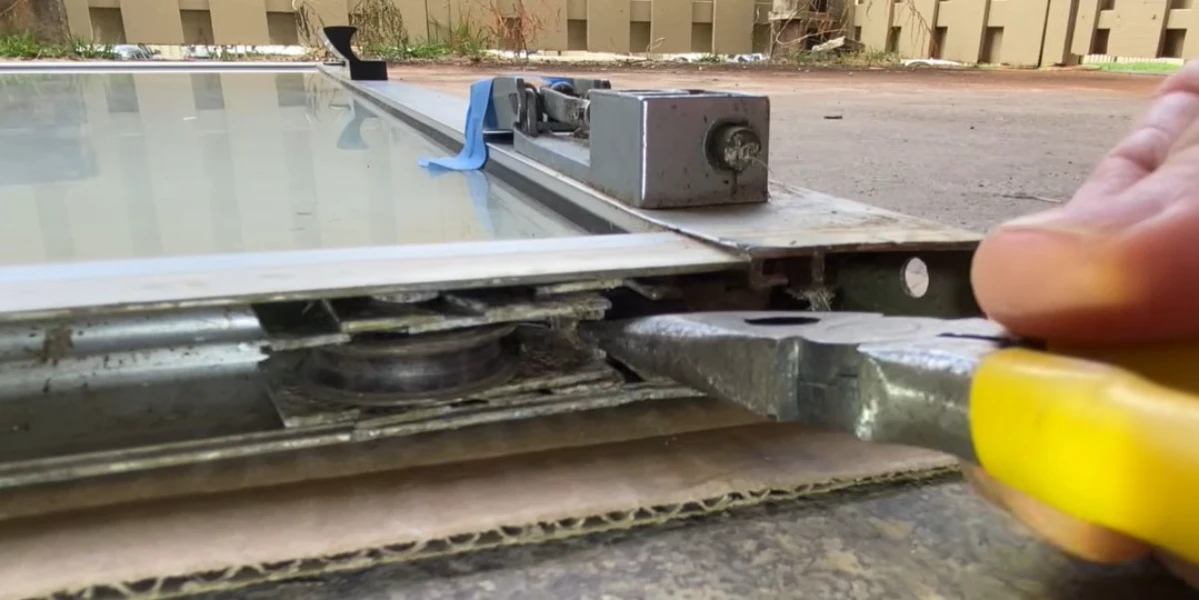
If the track has warped or corroded, track repair is added — typically $100–$200 more, but often the difference between a repair that lasts 3+ years and one that fails within 12 months.
Parts matter more in Fort Myers than most markets. Ask whether stainless steel rollers are available for your door — nylon rollers are fine for inland ZIP codes but steel axles corrode in salt-air environments. A licensed Lee County technician should carry 90%+ of common door brands on the truck.
Frequently Asked Questions
The Bottom Line for Fort Myers Homeowners
Your sliding door is working harder than it was designed to — not because of poor quality, but because Southwest Florida’s environment is uniquely demanding. The combination of Gulf salt air, daily heat cycling, and fine sand infiltration wears roller systems 2–3 times faster than manufacturer ratings assume.
If your Fort Myers door is more than 4 years old and showing any resistance, grinding, or uneven movement, a roller inspection now costs far less than the track damage and frame stress that deferred maintenance causes. Homes in Gulf Harbour, along the Caloosahatchee River corridor, and anywhere on Fort Myers Beach should treat roller service as a 3-year maintenance interval — not a 7-year one.
Same-Day Sliding Door Roller Replacement — All of Lee County
FL-Licensed Glass & Glazing Contractor · Parts for 90%+ of door brands on the truck · Written estimate before we start
📞 Get a Free AssessmentNot sure if worn rollers mean a quick fix or a bigger job? Our repair-or-replace decision guide for Fort Myers homeowners walks you through the signs.
2 Comments